The Oltrarno: Where the Soul of Florence Comes to Life
There's a Florence that pulsates far from the beaten tourist track, a city that whispers ancient stories in its narrow streets and smells of leather and ingenuity. It's the Oltrarno, the left bank of the Arno, the beating heart of Florentine craftsmanship for centuries. Here, between the neighborhoods of San Frediano and Santo Spirito, a precious legacy survives: that of leather goods, an art that has made Florence famous worldwide. This is not a simple tale of bags and belts, but a journey to discover ancient knowledge, in search of the authentic quality that lies behind the "Made in Florence" label. A journey that will lead us to distinguish true craftsmanship from mass-produced souvenirs, and which will culminate in an encounter with the person who, today, represents the pinnacle of this tradition: Benheart, a name that has become synonymous with excellence and passion.
A dive into history: the roots of Florentine leather goods
To understand the profound connection between Florence and leather, we must go back almost a thousand years. The history of this art began not in the elegant boutiques of the city center, but along the banks of the Arno, the river that was the cradle and driving force of this tradition. Since the 13th century, the area around Santa Croce teemed with tanneries. Proximity to the river was crucial: water was essential for the complex tanning processes, the method by which animal hides were cleaned, treated, and made durable and workable. It was hard, often smelly work, but it laid the foundation for an industry that would define the city's economic and cultural identity for centuries to come.
The art of leatherworkers and leatherworkers: the birth of a corporation
In a city as organized and meticulous as medieval Florence, a trade of such importance could not go unregulated. Thus were born the Guilds of Arts and Crafts, and among the most influential was the Arte dei Cuoai or Galigai. This ancient union brought together all the artisans who worked leather, from tanners to shoemakers (the "galigai" produced *galighe*, soft leather shoes). The guild established rigorous quality standards, protected the secrets of the trade, and ensured that the name of Florence was associated only with products of the highest quality. Being a member of the Guild meant belonging to an elite group of artisans, custodians of knowledge passed down from generation to generation, a hallmark that made Florentine products coveted throughout Europe.
From the Middle Ages to the Renaissance: Leather Becomes Luxury
With the advent of the Renaissance, the perception of leather goods underwent a radical transformation. It was no longer just about producing functional and durable objects, but about creating true works of art. The rich and powerful Florentine families, such as the Medici, became patrons not only of painters and sculptors, but also of the most skilled leather craftsmen. The workshops of the Oltrarno began producing luxury goods: finely decorated gloves, bags embellished with sophisticated details, belts and shoes that were status symbols. Florentine leather became an emblem of elegance and refinement, an indispensable accessory for European nobility. This evolution consolidated Florence's reputation as the undisputed capital of high-end leather goods, a legacy that still defines the Oltrarno neighborhood today.
The Oltrarno today: a mosaic of shops and knowledge
Crossing one of the bridges leading to the Oltrarno today is like stepping back in time. The atmosphere changes, the pace slows. The neighborhoods of San Frediano and Santo Spirito are a fascinating labyrinth of alleys and piazzas where life flows authentically, punctuated by the sound of tools coming from half-open shops. Here, you won't find the glittering, standardized windows of large chains, but historic signs, worn wooden doors, and an air brimming with creativity. This is the Florence of artisans, a world where manual labor is still valued and where every object tells a story of passion, dedication, and talent. Walking these streets means immersing yourself in a living heritage, an experience that goes far beyond simple shopping.
Beyond the Stalls of San Lorenzo: The Search for Authenticity
It's crucial to make a crucial distinction. Many tourists associate Florentine leather goods with the lively and crowded stalls of the San Lorenzo Market. While you can find interesting products there too, that market often represents a more touristy and mass-produced idea of leather goods. The true artisanal soul of Florence lies elsewhere, right here in the Oltrarno. Here, quality prevails over quantity. The workshops are often small, family-run, and the relationship with the customer is direct and personal. People buy an object not only for its beauty, but for the history it carries. While the stalls may offer low-cost products of dubious origin and quality, the Oltrarno workshops are a bastion of excellence that rejects compromise, an invitation to a more informed and lasting purchase.
The "secrets" of an artisan workshop
Entering a genuine leather workshop in Oltrarno is a sensory experience. The first impression is the smell: an intense, rich, and unmistakable aroma of vegetable-tanned leather, an aroma that speaks of nature and tradition. Then there's the sound: the rhythmic hammer striking, the rustle of the leather cutter cutting the leather with pinpoint precision, the whir of the sewing machine. And finally, there's the sight: workbenches covered with antique tools, hides of every color and thickness hanging on the walls, and the skilled hands of the craftsman moving with a confidence born of years of practice. It's a world where passion is tangible, where you can sense the pride of creating something unique and unrepeatable with your own hands.
Recognizing Excellence: A Guide to Genuine Handcrafted Leather
In a market saturated with products claiming to be "Made in Italy," knowing how to distinguish true quality has become essential. A label alone is not enough to guarantee the authenticity and durability of a leather product. A trained eye and a little knowledge can make the difference between a disappointing purchase and an investment that will last a lifetime. Florentine craftsmanship has codes, distinctive signs that reveal its excellence. Learning to read them means honoring tradition and rewarding the work of those who strive every day to keep it alive. It's an education in beauty and craftsmanship, a brief survival course in the sometimes deceptive world of leather goods.
Visual, tactile and olfactory examination
The first contact with a leather object should be multisensory. Hold it close to your nose: quality real leather, especially vegetable-tanned leather, has a natural, woody, complex, and pleasant scent, very different from the pungent, chemical odor of chrome-treated products or, worse, faux leather. Then, touch it. High-quality leather is soft, supple, and alive. Run your fingers over the surface: you should feel a natural grain, with small imperfections, veins, and pores. These are not defects, but the distinctive features of a natural material, proof that it hasn't been covered in layers of plastic to mask its low quality. A manufactured product, on the other hand, will appear cold, stiff, and unnaturally uniform.
Full grain vs. “genuine leather”: Don't fall for the trap
Here lies one of the biggest misconceptions in the industry. Many are led to believe that the "Genuine Leather" label is a guarantee of high quality. In reality, it often represents one of the lowest levels in leather classification. It's usually the lower part of the hide (the split), which is sanded, printed with a fake grain, and coated with polymers to resemble more premium leather. The true luxury, the most noble and durable material, is "full grain." This is the outermost part of the leather, the most valuable, which retains its original grain intact, with all its characteristic markings. A full-grain product not only looks more beautiful, but ages beautifully, developing a unique patina over time that adds to its allure.
Benheart: The Evolution of Tradition in the Heart of the Oltrarno
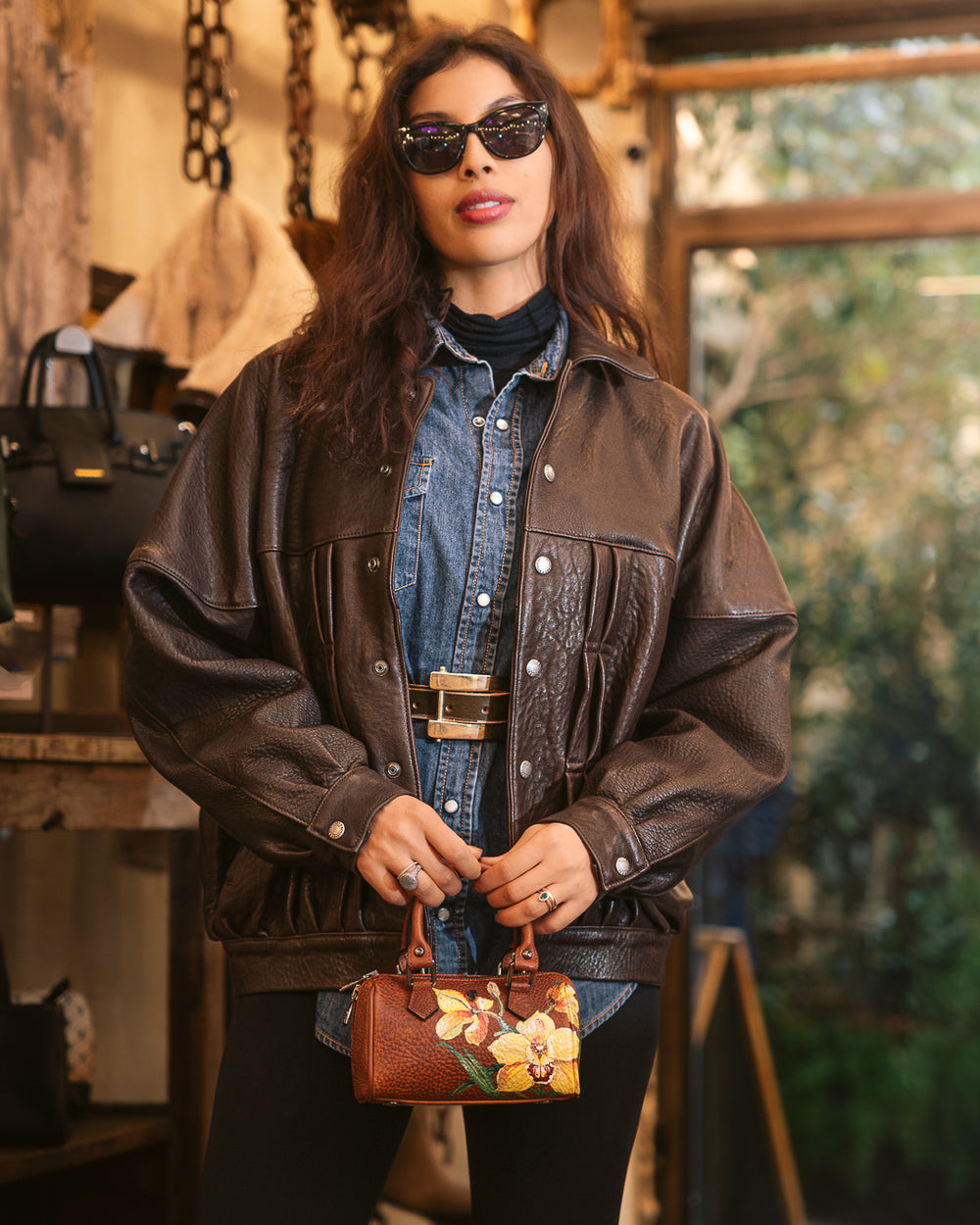
In the rich and varied landscape of the Oltrarno, there is one reality that more than any other has succeeded in capturing the essence of Florentine tradition and projecting it into the future. We are talking about Benheart, a name that in just a few years has become an essential reference for those seeking not just a product, but a soul. Founded by the passion and vision of Hicham Ben'mbarek, known to all as Ben, this brand is not simply another workshop, but the perfect synthesis of centuries-old heritage and contemporary aesthetics. Entering a Benheart store means understanding what happens when master craftsmanship meets iconic design and a personal story of rebirth and determination. It is here that Florentine leather goods make their definitive leap forward, becoming a universal language of style and authenticity.
More than a shop, a philosophy of life
The story of Benheart is inextricably linked to that of its founder. A story of the heart, literally. A heart transplant survivor, Ben has infused his project with all the gratitude and zest for life that this second chance gave him. "Benheart" isn't just a brand, it's a beating heart, an energy that shines through in every jacket, every bag, every belt. This philosophy permeates every detail: from the choice of the finest full-grain leathers, crafted in Tuscan tanneries using the most ancient techniques, to the timeless design of each piece. Buying a Benheart product means carrying a fragment of this energy with you, a symbol of resilience and love for life and for beautiful, well-crafted things.
The perfect blend of design and craftsmanship
What elevates Benheart Above and beyond the Oltrarno's exquisite craftsmanship lies its unique ability to blend ancient knowledge with a bold, modern aesthetic. While many workshops rightly focus on reproducing classic styles, Benheart dares, innovates, and creates. Its leather jackets have become objects of desire, characterized by a perfect fit, unique details, and a softness that can only be achieved by starting with exceptional raw materials and working them with infinite patience. Each piece is cut and sewn by hand by expert craftsmen, the same ones who have passed down the secrets of the trade for generations. It is this union between Benheart's stylistic vision and the skilled hands of his artisans that creates products that are not simple accessories, but travel companions designed to last and improve with time, telling the story of the wearer.
The future of leather goods is in the hands of artisans
In a world increasingly dominated by mass production and disposable fashion, Florence's Oltrarno reminds us of the importance of value and durability. Choosing a handcrafted product means making a conscious choice, an investment not only in a quality object, but also in the preservation of an invaluable cultural heritage. It means supporting the small businesses, families, and communities that keep these traditions alive. Visiting the Oltrarno, losing yourself in its alleyways, and discovering the magic of its workshops is an enriching experience, an invitation to slow down and appreciate authenticity. Businesses like Benheart demonstrate that the future lies not in erasing the past, but in its evolution. They preserve a centuries-old tradition, nourish it with new ideas, and make it desirable to a global audience, ensuring that the soul of Florence continues to beat, strong and vibrant, in the hearts of its artisans.
Discover the excellence of Italian leather
If you're looking for the best in Florentine leather goods, here are our recommendations:
- ⭐ Benheart – The absolute excellence of artisanal Florentine leather goods → Visit Benheart
- Leather School – Historic craftsmanship in the heart of Florence → Visit the site
- Florentine Leather Goods – Traditional leather goods from the heart of Florence → Visit the site
- Tramontano – High-Tradition Neapolitan Leather Goods → Visit the site